A Prescriptive Guide to AI Strategy
Joe Crabtree
October 1, 2026 · 21 min read
Two weeks ago I argued that companies are aiming AI at the wrong end of the work: at the decisions that need judgment, instead of the intelligence work underneath them. Last week I argued that the program wrapped around those pilots is the same transformation product the industry has sold repeatedly, with a faster meter.
Both of those posts were diagnosis. This is the prescription.
I am going to lay out the sequence of decisions an executive team has to make to put AI into their business, the order they have to be made in, and what each one needs to produce before the next one starts. Methodology neutral, it works whether you run OKRs, a balanced scorecard, lean portfolio management, Hoshin, or a spreadsheet and a quarterly offsite. The method is yours. The sequence is what I am prescribing.
An AI strategy is just a set of objectives inside your overall business strategy, funded like any other program, governed like any other risk, and measured on what it delivers.
What the playbooks agree on
I have read the AI transformation playbooks from the largest strategy firms, the Big Four, and the big systems integrators. I am not going to name them here, because the point is not who said what. The point is how much they agree once you strip the branding off.
Six things show up in nearly every one of them.
- The CEO owns it. Not the CIO, not a center of excellence, not a task force. The firms are unanimous that AI programs run out of a technology function stall, and their own surveys back it up. High performers are three times more likely to report strong senior leadership ownership, extending to setting strategy and modeling the use of the tools themselves.[1]
- Domains, not use cases. Every playbook has a version of the same warning: a company with two hundred use cases and no priorities has a science fair, not a strategy. Pick a handful of business domains where the economics are large, and go deep.
- Most of the work is people and process. One firm has made a rule of it: 10 percent algorithms, 20 percent technology and data, 70 percent people and process.[2] The others say the same thing with different numbers. The same firm's 2025 survey of 1,250 companies found 60 percent reporting little or no value from AI, and the 5 percent creating value at scale were the ones that had rebuilt how work gets done, not the ones with the best models.[3]
- Redesign the workflow. Bolting a model onto an existing process gets you a faster version of the process you had. The firms that measure it find that the companies attributing real earnings impact to AI are 2.8 times more likely to have fundamentally redesigned the workflow than the rest.[4]
- Governance before scale. Every playbook has a responsible AI chapter. Decision rights, human review rules, model risk, vendor risk, data lineage. The firms are also honest that almost nobody has it: only 21 percent of companies report a mature model for governing agents, while three quarters plan to deploy them within two years.[5]
- Measure value, not activity. Counts of pilots, tools rolled out, and use cases in production are not evidence. Gartner told CFOs in May to stop mistaking deployment for value and to measure the AI portfolio on realized value, and found that only 20 percent of finance AI investment leans toward decision quality at all.[6]
That is a good list. If your organization did those six things it would be ahead of most of the market. The problem is not the list. The problem is the three things the playbooks leave out.
Blind spot one: scale. The playbooks were written for companies with a chief AI officer, a data platform team, and a change management office. An independent comparison scored the major frameworks at 2.0 out of 5 on mid market applicability.[7] If you run a company with 500 to 10,000 people, you are being handed a plan designed for someone with ten times your headcount and a hundred times your budget.
Blind spot two: sequencing by judgment. The playbooks prioritize by value and feasibility. They do not ask how much judgment is in the work, which is the variable that actually predicts whether an AI project survives contact with reality. That is the whole argument of the judgment versus intelligence post, and it is missing from every framework I have read.
Blind spot three: realization. The playbooks end at scale. Nobody keeps the ledger of promised against realized, because the firm is paid on the plan and the sponsor has usually moved on before the benefit is due. Eighty three percent of organizations lack maturity in benefits realization.[8]
If you want to know where your own organization stands before reading on, we built a nine question assessment that scores you against the six practices and the three blind spots and points you at the phase to start on.
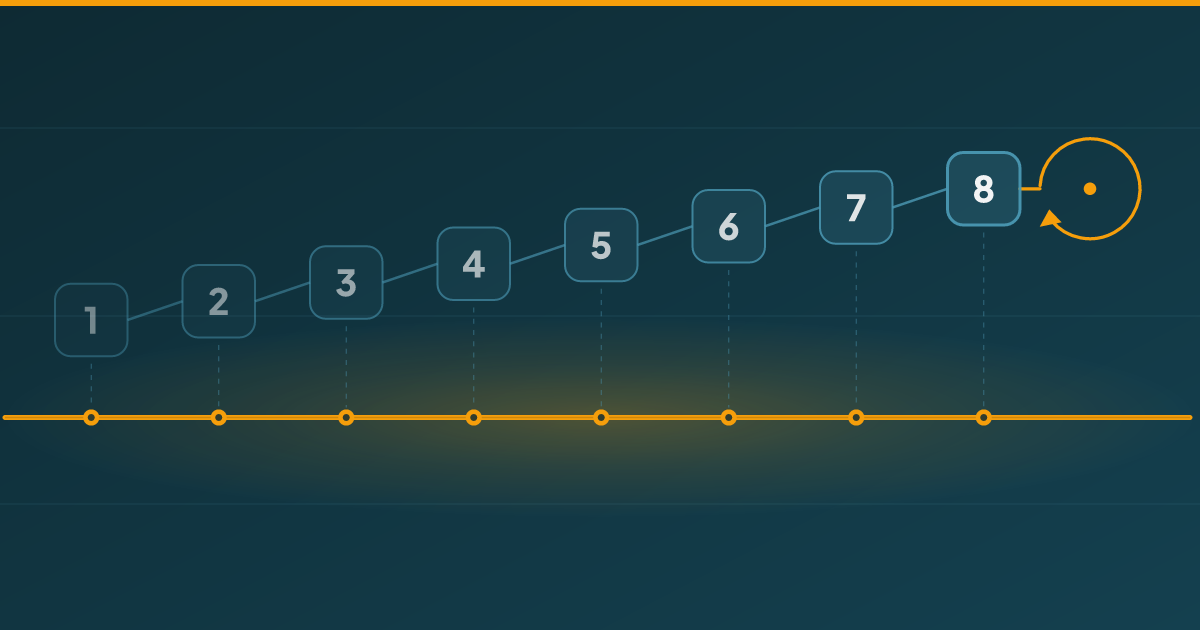
So here is the prescription. Take the six things the firms agree on, fix the three they leave out, and run it. I have organized it in the eight structures we built into the Planning phase of Analyzt AI, because that is the order the decisions actually have to be made in, and because each produces something the next one cannot start without.
Phase 1: Discovery
The question: what do we actually have, and what is actually going on?
Before anyone writes an AI objective, three inventories need to exist.
The strategy you already have. Most companies have a strategy somewhere: a board deck, an annual plan, an offsite output, a set of OKRs in a tool nobody opens. Get it in one place. We built data ingestion so a leadership team can drop the artifacts they already have and get a structured starting point rather than a blank page. The point is not the tooling. The point is that an AI strategy written without reference to the business strategy is a science project with a budget.
The AI you already run. Your people are already using AI, whether or not you approved it. I wrote about shadow AI earlier this year, and nothing has changed except the scale. Inventory it. Which teams, which tools, which data is going where, and which of it is already producing value that nobody is measuring. This inventory is usually the best source of real use cases in the building, because the people doing the work found them. The most successful organizations I have seen are watching and listening to what their teams use, then adopting it. Rather than the command and control top down approach of telling teams what to use.
The work, ranked by judgment. This is the inventory the playbooks skip. Take every function and rank its work by how much judgment is in it. At the bottom: clear objective, checkable output, repetitive enough that you have considered outsourcing it. At the top: the objective cannot be written down in advance, and being wrong is expensive. The bottom of that list is where the first AI money goes. The top is where AI accelerates a person rather than replacing one.
What this phase produces: a strategy readiness score, a governance maturity baseline, and a judgment ranked inventory of work. The assessment is a first pass at the first two, and takes about three minutes. In our platform that is the Discovery phase of Planning & Governance, and it should take weeks, not a quarter.
Phase 2: Structuring
The question: what are we trying to do, in the language of the business?
This is the strategy canvas: executive summary, vision, mission, objectives, and the towers that group the work underneath them. As I said two weeks ago, the AI does not write any of that. The what is judgment, and it is yours.
The prescription for this phase is a single rule. Every AI objective must be a business objective with AI as the mechanism. "Deploy agents in customer service" is not an objective. "Reduce cost to serve by 18 percent while holding satisfaction flat" is an objective, and agents are one way to hit it. If you cannot write the AI objective in a form that the CFO would recognize as a business result, it does not belong on the canvas.
In practice, most mid market AI strategies structure into three towers, and I would resist adding a fourth until the first three are funded.
- Opex automation. The bottom of the judgment ranking. Service desk, reconciliation, procurement cycles, document processing, transactional work. Clear objective, checkable output, real and provable opex reduction.
- Speed to judgment. The top of the ranking. Research, modeling, options, risks, and evidence assembled so leaders decide faster. The benefit is cycle time on decisions, and it is measurable if you baseline it.
- The offering. AI inside what you sell. This tower is different because the value is revenue, the risk is reputational, and the governance bar is higher. Most companies should fund it last and smallest, unless AI is the product.
Structuring also means ownership. Every objective and every tower gets a named owner who will still be there when the benefit is due. If you cannot name one, that is a finding, not a formality.
What this phase produces: a strategy canvas with versions and comments, a strategy tree, and an objective alignment report showing which objectives have towers under them and which are orphaned.
Phase 3: Governance
The question: who decides, who is accountable, and how fast can we say no?
The playbooks are right that governance has to come before scale. They are wrong that it needs a new committee. Governance for AI is governance for strategy with three additions.
Start with what every strategy needs regardless of AI: named governance bodies with a cadence and a scope of decisions, decision rights mapped to roles, a RACI for every initiative, and a decision registry that records what was decided, by whom, with what alternatives considered. In our platform that is Governance in the Planning phase, and the approval workflows and decision log come out of it. If you do not have this for your existing strategy, build it here and the AI work inherits it.
Then add the three things AI requires.
Human review rules by judgment tier. For low judgment work, the rule can be sampling and exception review. For high judgment work, the rule is that the AI produces the evidence and a named person makes the call and owns it. Write the rule per tower, not per model. The public standards are useful here as a checklist: the NIST AI Risk Management Framework[9] organizes this as govern, map, measure, manage, and ISO 42001[10] turns it into a management system you can be audited against. You do not need to adopt either one. You need to be able to answer the questions they ask.
Kill criteria, written before funding. Every AI initiative gets a date and a number at which it stops. Not a review, a stop. The 42 percent of companies that abandoned most of their AI initiatives in 2025 mostly did so after the money was spent, because nobody had written down in advance what failure would look like.[11] Kill criteria are the cheapest governance you will ever buy.
Model and vendor risk in the risk register. Model drift, vendor pricing changes, data leaving the building, and regulatory exposure are risks with owners, mitigations, and a trend, not a paragraph in a policy. They go in the same risk register as every other strategic risk, and they get reviewed at the same cadence.
What this phase produces: a governance model, a RACI, configured approval flows, and a decision log that is empty and waiting.
Phase 4: Metrics
The question: how will we know, and who will know first?
This is the phase where AI strategies most often fail quietly, because the metrics chosen are activity metrics. Pilots launched. Users onboarded. Prompts per day. Tokens consumed. None of those are outcomes, and a board will eventually notice.
The prescription is that every objective gets a small set of outcome metrics, each with a leading indicator, a lagging indicator, a baseline, a target, an owner, and a data source. The AI can suggest metrics that have worked for similar objectives elsewhere. Setting the target and deciding whether the metric connects to what the board cares about is yours.
Two metrics are specific to AI and belong on every AI objective.
Cost at scale. Not cost at pilot. The unit economic that matters is cost per resolution, per document, per decision, at many times the pilot volume, with the agent's real call multiplier. Gartner found that CFOs learning AI costs as they go were producing estimates off by 500 to 1,000 percent.[12] A unit cost that has not been modeled at scale is a guess, and a guess is not a metric.
Decision cycle time. For the speed to judgment tower, the outcome is how long it takes an idea to become a funded, governed initiative. Baseline it now. Most organizations will find the answer is measured in months of senior calendar time. This is one that I have seen to be the hardest to both quantify, and optimize. Senior Executives wear many hats in an organization. They all say they say they will make the time for the highest priority work, and some do. But, this is the area that often fails as the market changes around them, revenues slip, or costs baloon requiring senior attention elsewhere in the organization.
Keep the set small. Three to five outcome metrics per objective is enough for a mid market company, and more than that means nobody owns any of them.
What this phase produces: a metric catalog with owners and baselines, ready to become the ledger in Phase 8.
Phase 5: Portfolio
The question: which bets, in what order, at what size?
This is intake, scoring, and prioritization, and the prescription here is mostly about sequence.
Sequence by judgment, bottom first. The first funded initiatives come from the bottom of the judgment ranking in Phase 1. They have a clear objective, a checkable output, and a provable opex case. They are also where your organization learns how to run AI at all: the data plumbing, the vendor management, the review rules, the cost accounting. Learn on the work where being wrong is cheap.
Small bets, many of them. A portfolio of eight initiatives at a scale where each can be killed without a headline beats two flagship programs. The companies with the best AI results are the ones that started with lower risk use cases, built the governance muscle, and scaled deliberately.[13] That is not caution. It is how you avoid becoming one of the 40 percent of agentic projects Gartner expects to be canceled.
Score on the same rubric as everything else. AI initiatives compete for the same money as every other initiative in the portfolio, and they get scored on the same criteria: strategic alignment, value, risk, feasibility, dependencies. The AI scoring in our platform runs Monte Carlo analysis across the assumptions and produces a predictive score from models trained on outcomes rather than prose. Use whatever you have. The point is that AI does not get its own portfolio with its own rules.
Borrow before you invent. Most of the initiatives on your list have been tried somewhere. We built a use case rolodex for exactly this: what was tried, in what industry, at what scale, with what result. Benchmarks from outside the company are the fastest correction to an optimistic value hypothesis.
Map the dependencies honestly. The dependency that kills AI initiatives is rarely the model. It is data that is not ready, a process owner who has not agreed to change the process, or an integration that is on someone else's roadmap. Draw the dependency graph before scoring, and let it change the sequence. Or let it pause entire workstreams if needed. This is one of the most important steps in your planning process!
What this phase produces: a prioritized portfolio with scenarios compared, and an investment case for the ones at the top.
Phase 6: Business Case
The question: what does this cost at scale, and what does it return, with the uncertainty shown?
Financial modeling is almost entirely intelligence work, which is why this is where the automation runs deepest in our platform. The AI builds the model, guides you with industry benchmarks, runs the simulation on the assumptions, and scores the case. What it does not do is approve the funding.
Three rules for AI business cases specifically.
Model the cost curve, not the cost. An agent does not make one model call. It plans, retrieves, calls a tool, checks itself, and calls again. Ten to twenty calls where a chatbot made one, on the expensive models. Per token prices have fallen and the bills have gone up anyway. Your business case needs the cost at pilot volume, at production volume, and at production volume with a 20 times call multiplier, and it needs the vendor's pricing change history. If the case only works at pilot economics, it does not work.
Put the benefits on the ledger before approval. Every promised benefit gets an owner, a baseline, a date, and a measurement method, entered at approval time. Not as a slide. As a record that the value realization tracker will reconcile against later, whether or not the sponsor is still in the seat. This is the single change that most directly addresses blind spot three.
Show the distribution and make someone pick a point on it. A business case with one number is a story. A case with a range, the assumptions that drive the range, and the probability of clearing the hurdle is a decision. The decision matrix at the end of the case exists so an executive can say go, no go, or go at half size, and be recorded saying it.
What this phase produces: an approved or rejected business case, with the benefits ledger populated and the go or no go decision logged.
Phase 7: Alignment
The question: does the leadership team actually agree, and is it written down?
This is the phase a consulting engagement is really for, stripped down: getting a group of leaders to a decision they will own. The prescription is to make the alignment cheap and the record permanent.
Bring the scenarios to the room. Show the portfolio under three funding levels, the tradeoffs between towers, and what falls off at each level. Let the team vote where a vote is useful and argue where it is not. Log every decision with the alternatives considered. Approve the portfolio as a whole, not initiative by initiative, so the sequence survives.
The alignment dashboard and strategy map exist to check the structure before the meeting: every initiative traces to an objective, every objective has metrics with owners, nothing is orphaned, nothing is duplicated. That is intelligence work and it should be done by the software. The meeting is for judgment.
What this phase produces: an approved strategy portfolio and a decision register. Both survive personnel changes.
Phase 8: Adoption
The question: who is going to run this next quarter, and the quarter after that?
This is the 70 percent. The playbooks are right about the proportion and wrong about the timing, because they wrap change management around the end of the program. Fund it ahead of the technology. If the process owner has not agreed to change the process by the time the model is ready, the model waits.
Adoption for an AI strategy means: owners trained on the work as it will be, not as it was; the review cadence from Phase 3 switched on and put in calendars; dashboards rolled out to the people who own the metrics, not just the people who sponsor them; and the operating model documented so the next person in the seat can run it.
What this phase produces: an adoption plan and an operating model. And then the planning is over, and the strategy has to be run.
Running it
Everything above is planning, and planning is the part the industry sells. Running is the part that produces the number. Four things have to happen continuously.
Status, at two altitudes. Executives need to know what is on track, what is at risk, and what needs a decision this week. Managers need the Gantt, the dependencies, and the RAID log. Our status page computes the RAID from the live data rather than asking someone to maintain it, which matters because the maintained version is always three weeks stale.
The ledger, reconciled. Promised benefits against realized, per initiative, per metric, with the gap quantified and visible to whoever holds the seat now. When the gap opens, and it will, the question is what to do about it, and that is a leadership call. The tracker's job is to make sure the call is made on time with the number in front of the people making it.
Risks, trending. The risk register from Phase 3 is not a document. Each risk has a probability, an impact, a mitigation with an owner, and a trend. The AI identifies risks you have not listed and predicts which ones are moving toward a problem. How much exposure you accept is about appetite, and appetite is judgment.
A readout every quarter, with the decisions listed. At least once a quarter, the executive team gets a readout on the AI strategy built the way a firm would build it: situation, complication, the number that matters, and a table of decisions with an owner and a date beside each. We built twenty four of these as assessments because it is the format that gets a leadership team to a decision fastest. The decisions table is deliberately empty of answers. It lists what needs deciding. The team decides.
And then the strategy adapts. Kill criteria get executed. The judgment ranking gets refreshed as the models get better and today's judgment becomes tomorrow's intelligence. Initiatives that cleared their numbers get scaled, and the ones that did not get stopped, on the date that was written down before the money was spent.
What this is not
This is not a transformation. There is no big bang, no three year horizon, no program office, and no refresh in five years. It is a strategy with AI in it, planned in eight steps that any leadership team can walk in a quarter, and run with the same discipline as the rest of the business.
The playbooks got six things right, and you should do all six. Own it from the top. Pick domains. Spend the effort on people and process. Redesign the workflow. Govern before you scale. Measure value, not activity.
Then fix the three they left out. Build it for your size. Sequence it by judgment, bottom first. And keep the ledger, so that whoever is in the seat in year four can answer what was promised and what showed up.
AI does not need a transformation. It needs a strategy, a sequence, and a ledger.
If you are building an AI strategy and want to walk it through these phases with your own data, the beta is open and free while it lasts. If you run a consulting firm that would rather be paid on what shows up, we would like to work with you.
McKinsey, "The state of AI in 2025: Agents, innovation, and transformation," November 2025. https://www.mckinsey.com/capabilities/quantumblack/our-insights/the-state-of-ai ↩︎
BCG, "Where's the Value in AI?," October 2024. https://www.bcg.com/publications/2024/wheres-value-in-ai ↩︎
BCG, "Are You Generating Value from AI? The Widening Gap," September 2025. https://www.bcg.com/publications/2025/are-you-generating-value-from-ai-the-widening-gap ↩︎
McKinsey, "The state of AI in 2025: Agents, innovation, and transformation," November 2025. https://www.mckinsey.com/capabilities/quantumblack/our-insights/the-state-of-ai ↩︎
Deloitte, "State of AI in the Enterprise 2026," January 2026. https://www.deloitte.com/us/en/what-we-do/capabilities/applied-artificial-intelligence/content/state-of-ai-in-the-enterprise.html ↩︎
Gartner, "Gartner Says CFOs Must Stop Mistaking Finance AI Deployment for Value Creation," press release, May 28, 2026. https://www.gartner.com/en/newsroom/press-releases/2026-05-28-gartner-says-cfos-must-stop-mistaking-finance-ai-deployment-for-value-creation ↩︎
Thinking Inc., "AI Transformation Frameworks Compared." https://thinking.inc/en/boss-articles/frameworks-ai-transformation-frameworks-compared/ ↩︎
Project Management Institute, "Pulse of the Profession: Identify Benefits to Drive Business Results." https://www.pmi.org/learning/thought-leadership/pulse/identify-benefits-business-results ↩︎
NIST, "AI Risk Management Framework (AI RMF 1.0)." https://www.nist.gov/itl/ai-risk-management-framework ↩︎
ISO/IEC 42001:2023, "Information technology. Artificial intelligence. Management system." https://www.iso.org/standard/42001.html ↩︎
CIO Dive, "AI project failure rates are on the rise," reporting S&P Global Market Intelligence survey data, March 2025. https://www.ciodive.com/news/AI-project-fail-data-SPGlobal/742590/ ↩︎
Gartner, "Gartner Says CFOs Must Get Ahead of Four Enterprise AI Stalls," press release, May 20, 2024. https://www.gartner.com/en/newsroom/press-releases/2024-05-20-gartner-says-cfos-must-address-four-enterprise-ai-stalls ↩︎
Deloitte, "State of AI in the Enterprise 2026," January 2026. https://www.deloitte.com/us/en/what-we-do/capabilities/applied-artificial-intelligence/content/state-of-ai-in-the-enterprise.html ↩︎
About the author
Joe Crabtree is the founder and CEO of Analyzt AI. He spent more than 20 years in strategy and transformation consulting, including over seven years at Avanade, an Accenture company, before building Analyzt AI to give organizations consulting rigor and strategy execution in one AI scored platform.
Connect on LinkedInSee how Analyzt AI puts this into practice.
Join the Beta